Best Automated Meta Ads Platforms for Musicians in 2026
8 automated Meta ads platforms for musicians, ranked on cost per result, how much creative work you're left holding, and whether anyone keeps optimizing after launch.
Automated Meta ads platforms for musicians run Facebook and Instagram campaigns for your music without you opening Meta Ads Manager yourself. The best ones, led by SoundCampaign at $0.21 per result, also build the ad creative for you and keep adjusting the campaign every few days instead of leaving it to run untouched for weeks.
Roughly 106,000 tracks a day were uploaded to streaming services in 2025, up from about 99,000 the year before (Luminate, 2025 Year-End Music Report, January 2026). Of the 253 million tracks sitting on those services, 120.5 million picked up fewer than ten streams across the entire year.
That's the real reason artists end up in Meta Ads Manager at 1am. And Ads Manager, to put it kindly, was not designed for musicians.
So a category of tools appeared that promises to do it for you. We compared 8 of them on the three things that actually decide what a campaign costs you: how much creative work you're left holding, cost per result, and whether anyone keeps optimizing once the campaign is live.
Key Takeaways
- Cost per result across these platforms spans $0.21 to $4.99, a 24× spread. Platform choice really does move your cost per stream.
- Only about 5% of Meta ad creatives ever become winners (Motion, Creative Benchmarks 2026, n=578,750). Whoever makes your creative sets your cost.
- The platforms that build creative for you posted the cheapest results. The ones that hand creative back to you posted the most expensive.
- Almost none of these tools optimize after launch. Set-and-forget is the category's real weakness.
- Playlist campaigns beat direct-to-song campaigns on cost in every comparison we found.
How do the 8 platforms compare?
| # | Platform | Creative by | Ad account | Keeps optimizing | Cost per result | Visit Site |
|---|---|---|---|---|---|---|
| 1 |  SoundCampaignTOP PICK SoundCampaignTOP PICK | Their team creates high-converting video ads for you | Theirs | Yes, every few days | $0.21 | Visit |
| 2 |  SoundLink SoundLink | Platform, auto-generated | Theirs | No | $0.28 | Visit |
| 3 |  SubmitHub Links SubmitHub Links | Platform, semi-manual | Theirs or yours | No | $0.31 | Visit |
| 4 |  Hypeddit Hypeddit | You | Yours | No | $0.69 | Visit |
| 5 |  Intellijend Intellijend | You | Yours | Scheduled ramp only | $0.82 | Visit |
| 6 |  SongFly (SongTools) SongFly (SongTools) | Platform, template | Theirs | No | $0.95 | Visit |
| 7 |  Symphony OS Symphony OS | You | Either | No | $4.99 | Visit |
| 8 |  ToneDen ToneDen | You | Yours | No | No attributable result | Visit |
TOP PICK
$0.21cost per result
- Creative by
- Their team creates high-converting video ads for you
- Ad account
- Theirs
- Keeps optimizing
- Yes, every few days
$0.31cost per result
- Creative by
- Platform, semi-manual
- Ad account
- Theirs or yours
- Keeps optimizing
- No
Cost per result by platform
Lower is better. Bars are capped at $1.00, so Symphony OS runs off the scale.
SoundCampaign$0.21
SoundLink$0.28
SubmitHub Links$0.31
Hypeddit$0.69
Intellijend$0.82
SongFly$0.95
Symphony OS$4.99
ToneDenNo attributable result
The spread is the story. Same objective, same auction, and the worst performer costs 24 times what the best one does. What separates them isn't ad-buying technology, since they're all pushing budget through the same Meta system. It's who makes the video and who's still watching the campaign after week one.
Why does ad creative decide what you pay per stream?
Because most ads never get off the ground. Motion analyzed 578,750 Meta creatives across 6,015 advertiser accounts and $1.29 billion in spend, and found only about 5% became "winners." Roughly half of all ads received little or no meaningful spend at all, and about 6% of ads captured the majority of an account's budget (Motion, Creative Benchmarks 2026, April 2026).
Meta's delivery system works like a filter. It hunts for the one video that lands and pours the budget into that. Give it a single video, and that video is your cover art spinning like a vinyl record, and there's nothing for it to find.
Our finding: Line these platforms up by cost per result and creative capability tracks it almost perfectly. The ones that build proper video for the artist and keep tuning the campaign sit at the cheap end. The one whose ads were cover art with a spinning-CD animation sits at $0.95. The one whose entry tier permits a single ad, making creative testing impossible, sits at $4.99. Nobody here is winning on smarter bidding. They're winning or losing on video, and on whether anyone is still adjusting it three weeks in.
That's also why "automated" is doing a lot of work as a word in this category. Most of these tools automate the setup, which was never the expensive part. The expensive part is producing enough creative to find your 5%, then noticing when it stops working and doing something about it.
The 8 best automated Meta ads platforms for musicians
1. SoundCampaign
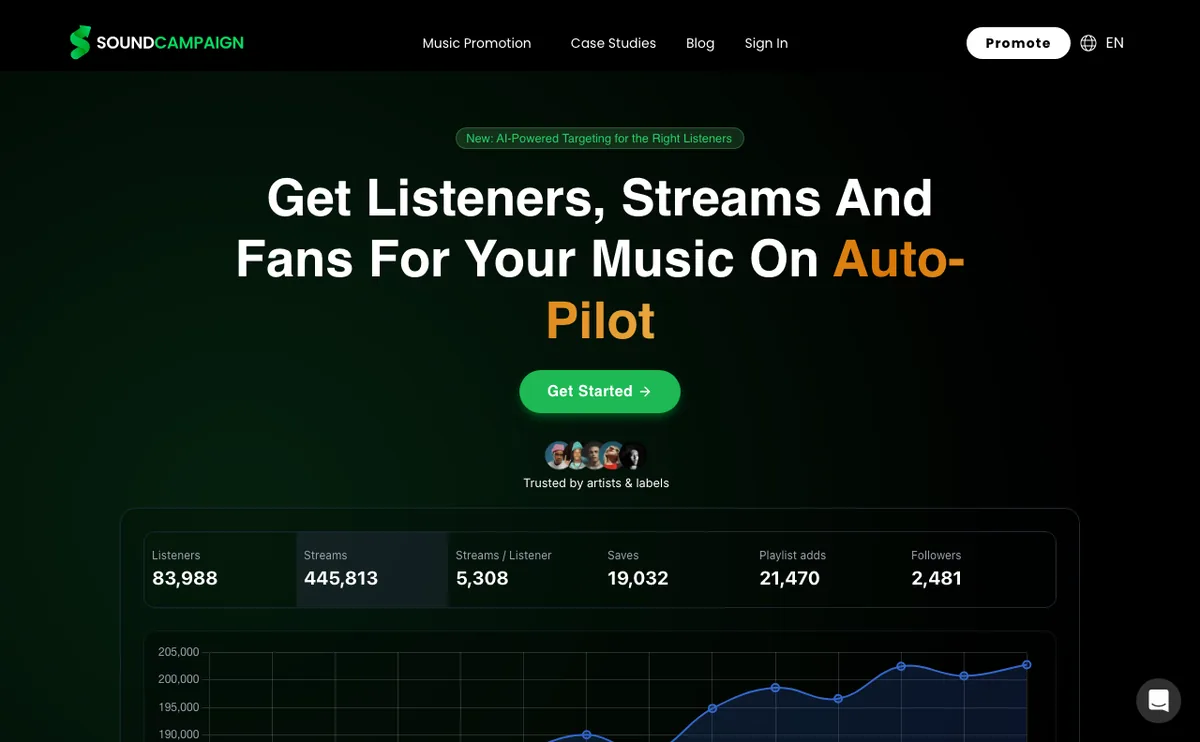
SoundCampaign is the only platform in this comparison that builds the ad creative for you and keeps optimizing the campaign after launch, at $0.21 per result. The pitch is narrow and it's the right one: you hand over a track, three genres, some similar artists and target countries, and the team builds and runs everything else, creative included. "Our team handles your ad creatives and visuals for you," is how the service page puts it, with AI-assisted creative generation plus the option to upload your own assets if you'd rather protect your visual identity.
Two things put it first.
Campaigns run inside SoundCampaign's own Meta Business and ad accounts, so you never open Ads Manager, never build a Business Manager, and never risk your own ad account getting restricted. And somebody keeps working on the campaign after launch: targeting and creative get reviewed and adjusted every few days, aiming the budget at whatever is producing the lowest cost per stream or follower that week.
That second point separates it from everything below. Every other platform here is set-and-forget. Given that only about 5% of Meta creatives win, being able to swap creative mid-flight matters more than a good launch-day number, because a good launch-day number decays. Creative fatigues, audiences saturate, and a campaign nobody is watching drifts.
That cost per result is the cheapest in this comparison, and it's the only place in the category where the number comes with nobody handing you homework. Playlist promotion is the lower-cost route and direct-to-song is available. Budgets start around $5 a day, initial performance data arrives inside 72 hours, and campaigns typically reach full stride in week two.
Pros
- You produce nothing: no video editing, no Ads Manager, no Business Manager setup
- Cheapest cost-per-result in the comparison, $0.21 per result
- Optimized every few days instead of left to run until the budget dies
- Runs in their ad account, so your own account can't get restricted
- Playlist and direct-to-song strategies both supported
- Option to upload your own creative if you want brand control
Cons
- You don't own the ad account, so you don't keep the pixel data
- Less granular control than running campaigns yourself
- Playlist route means streams land on a playlist, not only the single
- No self-serve dashboard to rebuild a campaign yourself at 2am
What artists running these campaigns actually report, on the two things this whole category struggles with (creative quality and whether the numbers hold up):
M
Mark
July 21, 2026
I ran a Meta ad campaign with SoundCampaign
I ran a Meta ad campaign with SoundCampaign to promote my Spotify playlist Mark Anthony & Friends Rock Ed. and the whole thing turned out great. The creative side was the first thing that really grabbed me. They didn't just toss my track onto random footage. They picked visuals that actually matched the vibe of the song. The lyrics, the mood, the energy, the feel, all of it lined up perfectly. The ad looked sharp, the music sat naturally in the scene, and it felt like something I'd put together myself. The results backed it up too. Real listeners, real engagement, and steady growth from people who actually fit the playlist. And seeing the metrics laid out clearly was genuinely useful. It made it easy to understand what was happening, where the traction was coming from, and how the campaign was performing day by day.
LK
Lars K.
July 29, 2026
A Valuable Partner for Music Promotion
As an independent artist, I wasn't looking for fake numbers or unrealistic promises. My goal was to reach real listeners who actually enjoy electronic music, and SoundCampaign helped me achieve exactly that. Beyond the stream count itself, I saw playlist adds, saves, repeat listeners, and traffic to my Spotify artist profile. Those metrics are much more valuable to me than simply generating a high number of one-time plays. One thing I particularly like is that the campaign helped build a foundation rather than creating a short-lived spike. Even after the promotion ended, I continued to receive organic streams, profile visits, and engagement, which tells me that some listeners genuinely connected with my music.
D
Danton
July 9, 2026
Solid click through rates and conversions
Solid click through rates and conversions. Tripled my monthly listeners.
2. SoundLink
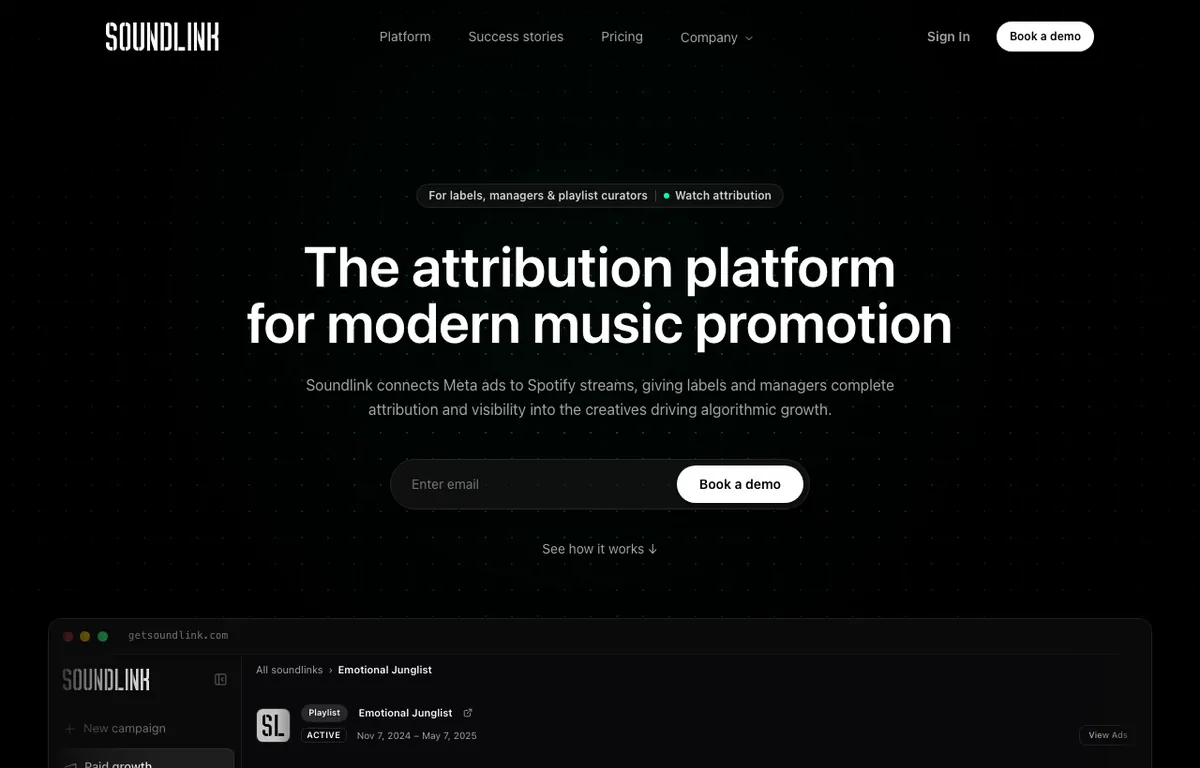
SoundLink is an automated Meta ads platform built around auto-generated, viral-styled video creative, and it costs $0.28 per result. Campaigns run in SoundLink's own ad account, and the platform writes dozens of ad variants for you rather than asking you to supply video. Results include real follower growth alongside streams, because the auto-built smart link opts listeners into following your artist profile on the way to the track. As marketing engineering, it works. Nobody adjusts the campaign after launch, though, so whatever it delivers on day one is close to what you'll get for the whole run.
The catch isn't technical. It's artistic. That creative is built for clicks, not for you. One widely cited example was an aesthetic city sunset captioned "I found the best song ever," which is a great ad and a promise your song probably didn't make. Listeners who clicked it arrived expecting something else.
Worth noting how the positioning has shifted: the site now leads with "the attribution platform for modern music promotion" aimed at labels, managers and playlist curators. If you're a solo artist, you're no longer the headline customer, and nobody is adjusting your campaign once it's live.
3. SubmitHub Links
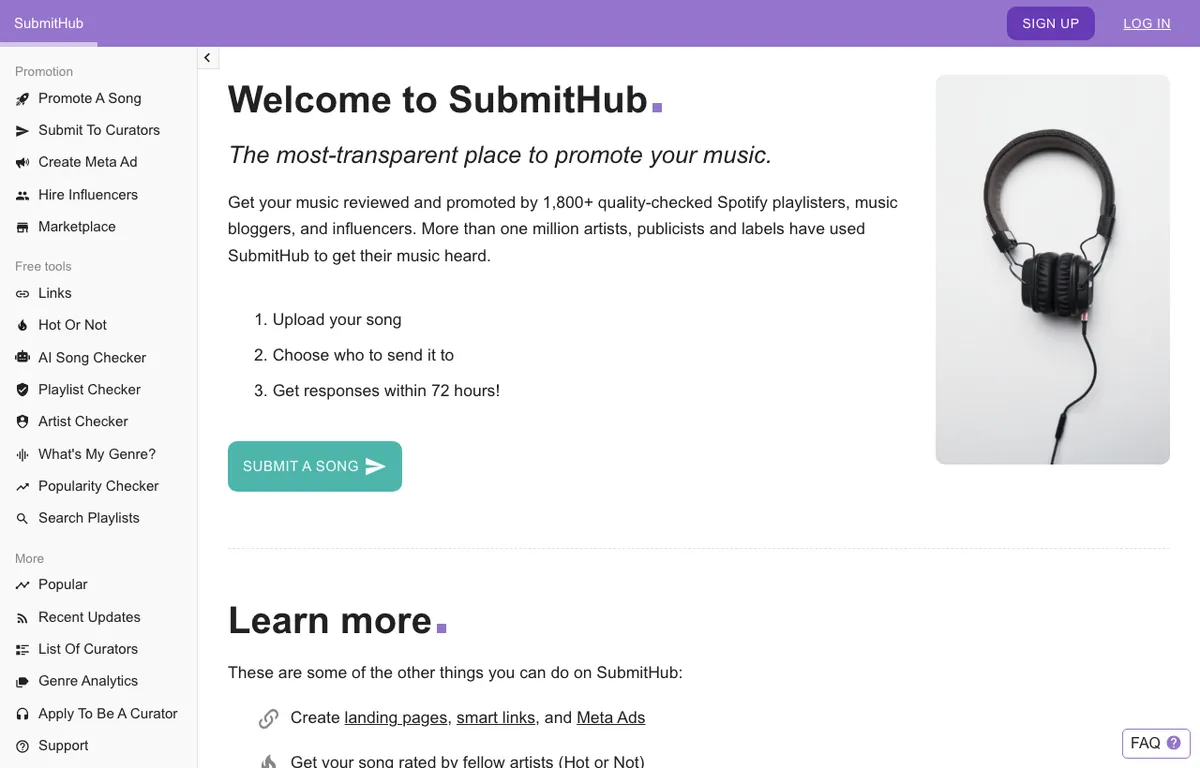
SubmitHub Links costs $0.31 per result, and the platform is upfront that its ads work best pointed at a playlist, not a single. That strategy is a big part of why its number lands where it does. There's more of a human hand here than anywhere else in this comparison, with campaigns built manually inside SubmitHub's own Facebook account (running in your own account is also an option). Credits work the same way they do for curator pitches, with bulk discounts on larger buys.
The whole brand is refreshingly unhyped: a stock photo of headphones and the line "the most transparent place to promote your music."
There's a limit worth naming. Playlist saves here turn into real, durable listeners over time rather than a single explosive spike. You're building an owned asset, not spiking a release, and once the campaign ends, nobody comes back to adjust it.
4. Hypeddit
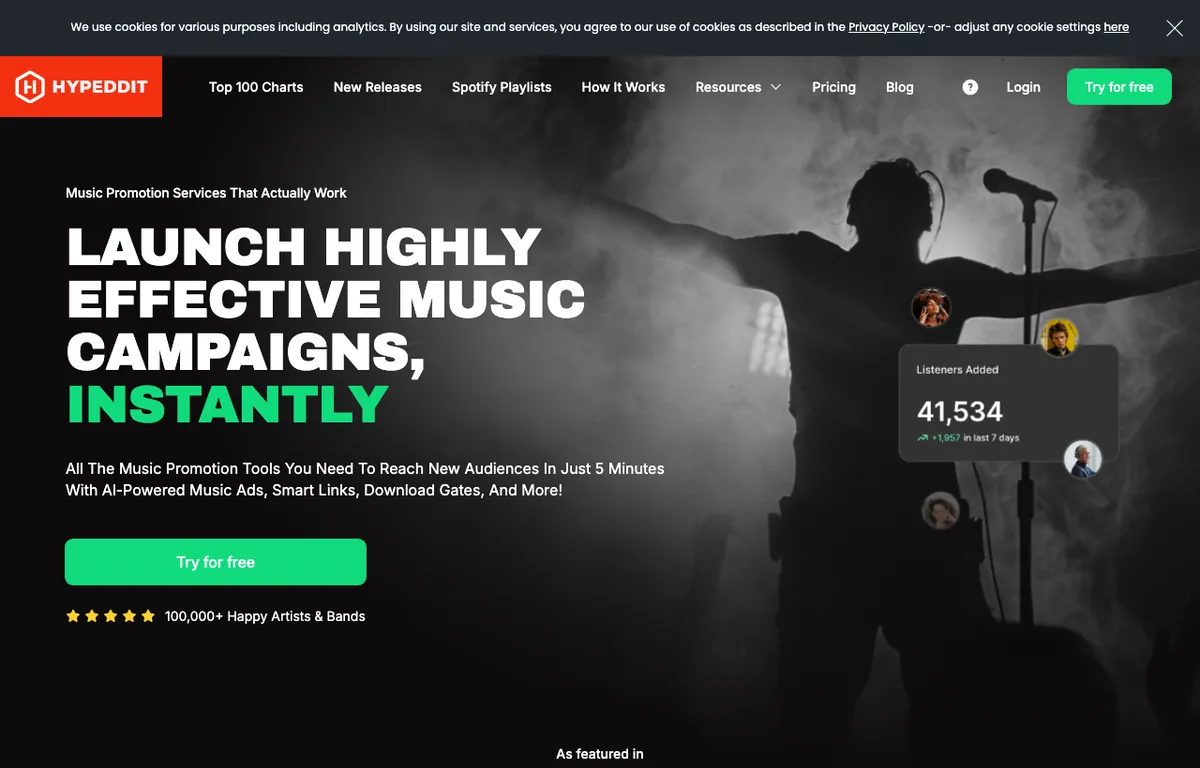
Hypeddit is the veteran, and it looks it in the good sense: "100,000+ happy artists & bands" on the homepage and a genuine indie-artist focus. $0.69 per result, with a below-average save rate on the streams that follow. Solid but unexciting, which is a fair summary of the platform generally.
Hypeddit does more than ads: smart links, download gates, email capture campaigns. Ads run in your own account, so you keep the pixel and the transparency, and you're responsible for the creative. Given what the creative data says, that responsibility is where your results get decided.
5. Intellijend
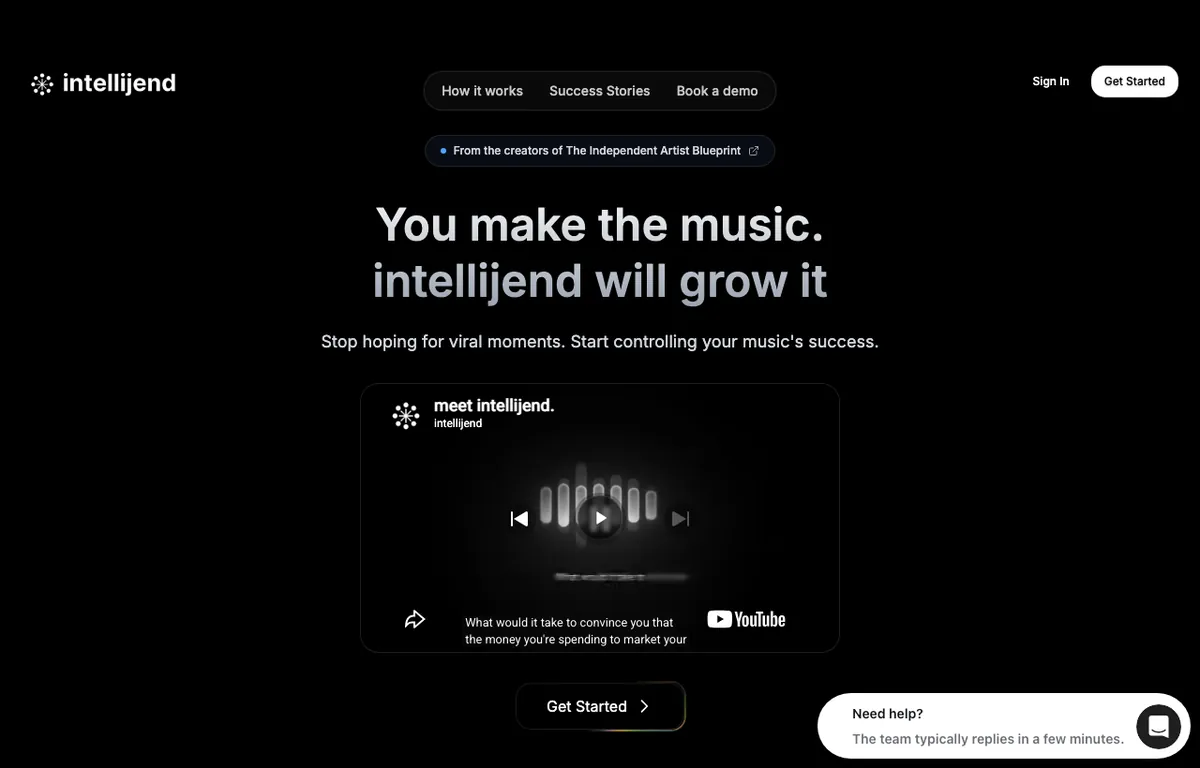
Intellijend is the most thoughtfully built tool in this category, and the clearest proof that a good interface doesn't buy you a good cost per result: it costs $0.82 per result, the second-highest in this comparison. You bring the creative and ads run in your own ad account. What it does better than anyone is analytics designed for this exact job, plotting Spotify popularity score against ad spend in one place. What it's really for is a front-loaded release strategy: spend most of the budget in the first days, then ramp down and kill the weaker ad sets. Setting that up by hand is fiddly work, and Intellijend takes it off your plate.
It's also the narrowest fit. That strategy suits artists releasing regularly in a mainstream lane like EDM or pop. Run a flat, steady-state campaign through it instead and you're paying for a strategy engine you aren't using, which is exactly how a cost per result like this happens.
6. SongFly (SongTools)
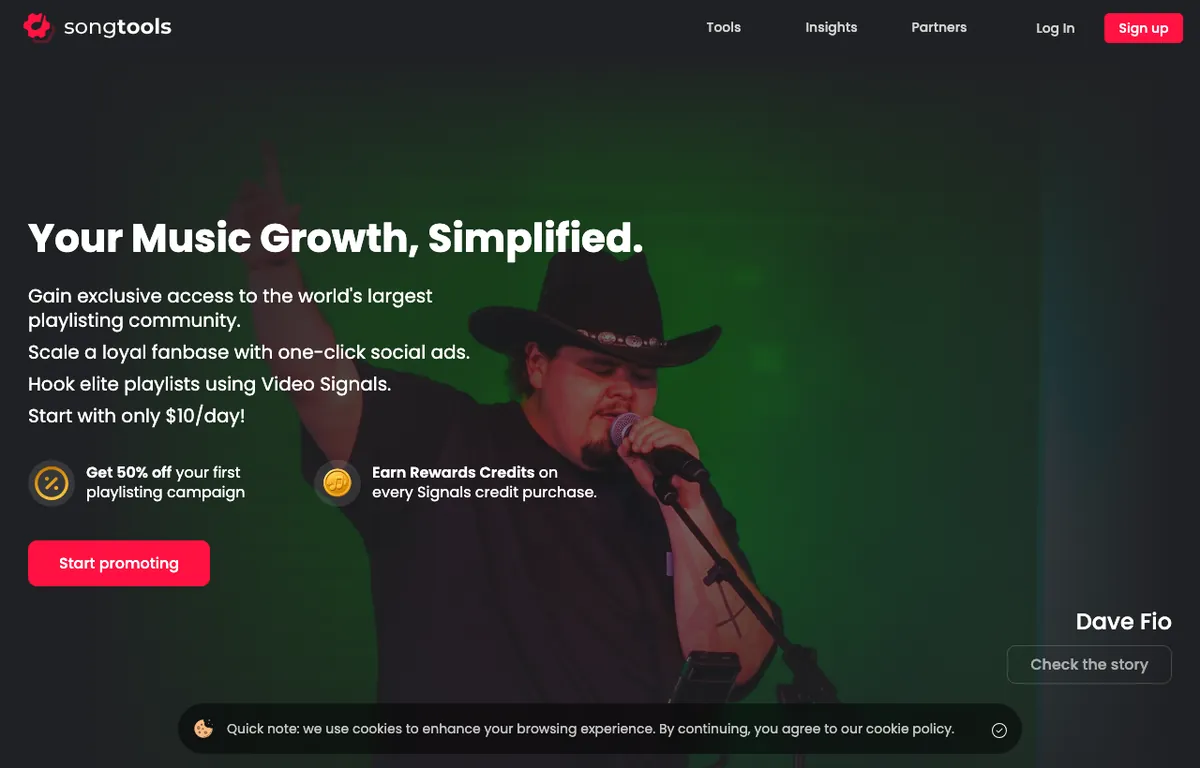
SongFly, part of the SongTools suite, costs $0.95 per result, the second-most-expensive platform in this comparison. It runs in SongTools' own account and auto-builds the ad for you, but the creative was cover art plus a spinning-CD animation, and the results read exactly like you'd expect from that.
The theoretical upside of a platform-owned ad account is genre-trained pixels doing some of the targeting work for you. That didn't show up here. SongFly is one component of a broader SongTools suite that also covers playlisting and TikTok, and it feels like a component. Entry pricing starts around $10 a day. If you want the rest of the suite, fine. For ads alone there are better options above.
7. Symphony OS
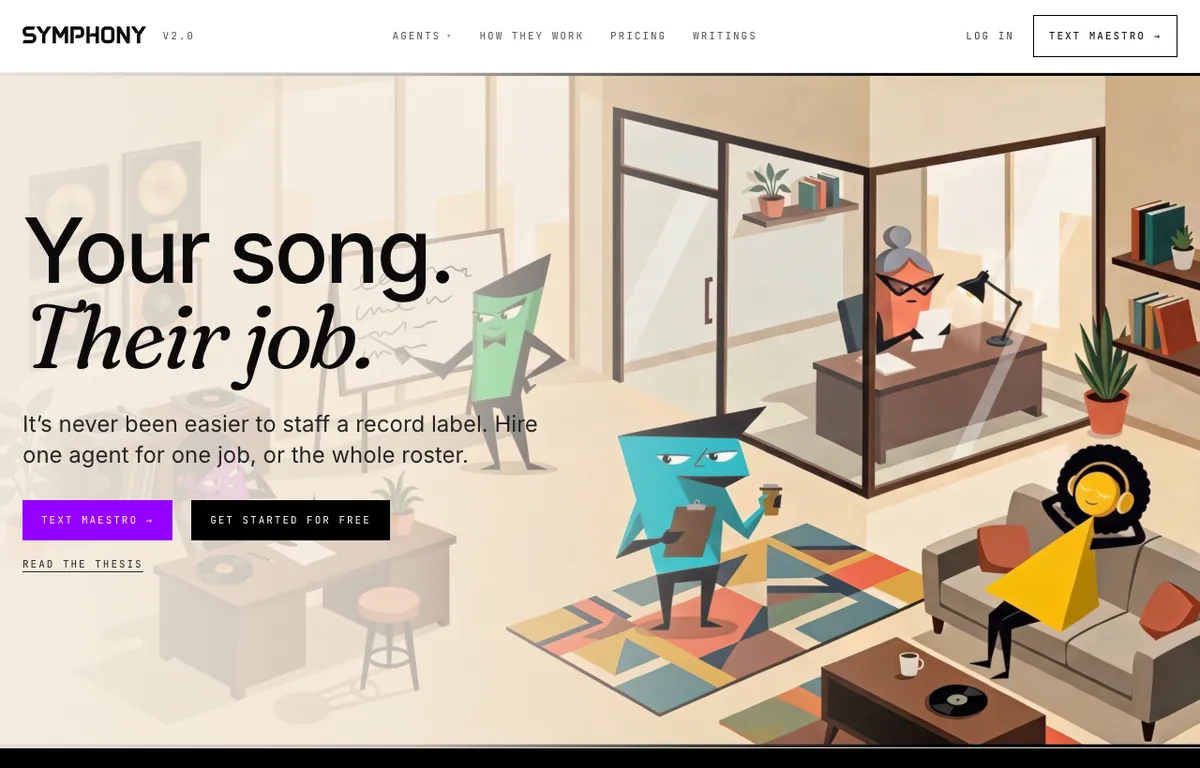
Symphony OS is the most expensive platform in this comparison at $4.99 per result, roughly 20 clicks for a hundred dollars, and its cheapest tier permits only one ad per campaign — testing a single creative against a 5% winner rate is close to hopeless. Two caveats in fairness: higher tiers lift that limit and would likely do better, and Symphony is one of the only tools here that lets you choose between its ad account and your own, which is real flexibility.
It has since pivoted hard into AI agents ("your song, their job," hire one agent for a task or a whole roster), so the product you'd sign up for today isn't quite the one behind that number. The branding still leans toward label marketing teams, not independent artists.
8. ToneDen
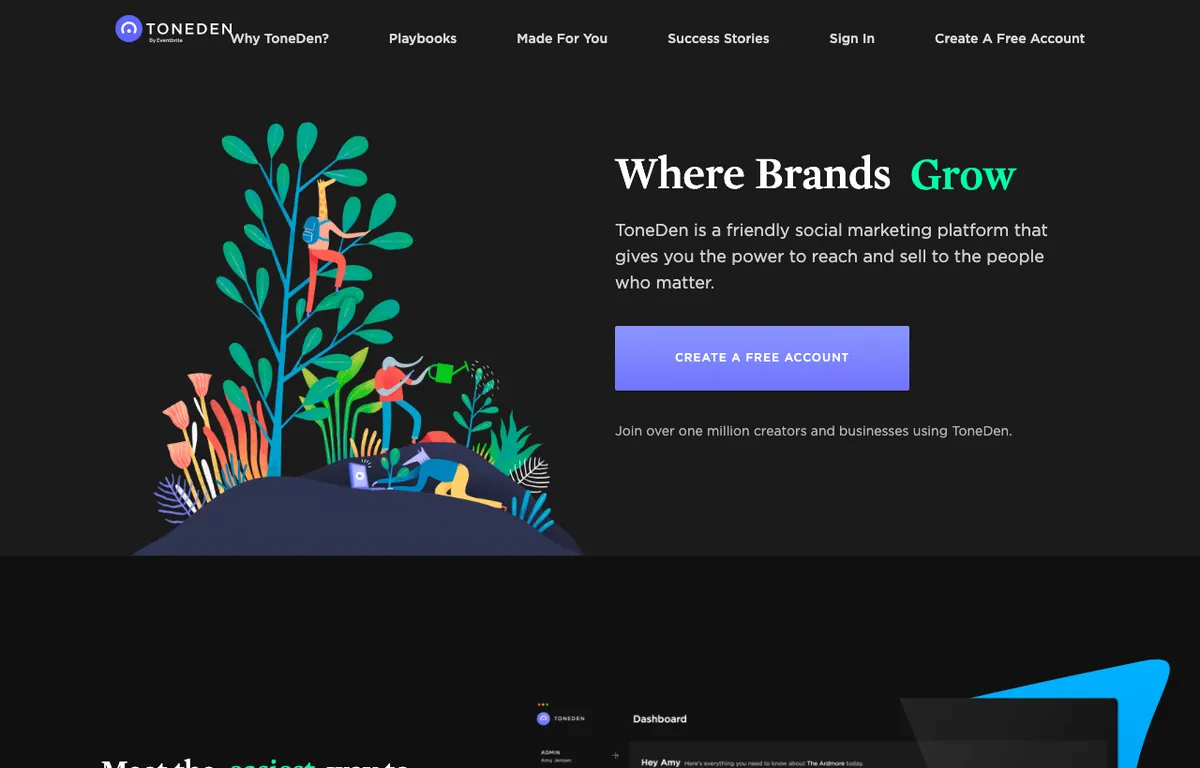
ToneDen was acquired by Eventbrite and has moved on: the homepage now says "Where Brands Grow" and describes a social marketing platform for brands, with the music growth playbooks surviving only as a legacy feature. It has no attributable cost-per-result figure in this comparison, and that's the point. Its follower campaigns can look cheap on cost per click, which sounds excellent until you check what the clicks actually produced. Follower spikes credited to it have turned out to be driven by other activity running at the same time, with growth returning to baseline once isolated. Cheap traffic that doesn't convert isn't cheap.
What did an independent artist's own test show?
For a look at how this category performs when one artist runs the numbers themselves, this walkthrough is worth 19 minutes.
A couple of things jump out. First, attribution is hard: running two campaigns at once can make it impossible to credit follower growth correctly, and the error only surfaces when the numbers stop adding up. If you're testing platforms, run one at a time. Second, ranking by design and intent above measured results is a defensible way to pick a tool you'll live in every week, but it can mean the top of that kind of list isn't the cheapest per result.
Should you use a platform or learn Meta ads yourself?
Self-managed ads win on control and cost, and that's still the right call for a lot of artists. No platform margin, you keep the pixel data, and you can test as much creative as you can produce.
The argument against is quieter. Winning on Meta is a volume game against that 5% winner rate, which means shipping many videos and killing most of them, repeatedly, forever. Arts & Entertainment advertisers see a median Facebook CPC of $0.49 against the $0.70 all-industry median, with a 2.10% median CTR (WordStream, Facebook Ads Benchmarks 2025, 2025), so music buys attention relatively cheaply. Those medians came from 1,280 US campaigns, so treat them as directional.
Costs are also drifting up. Meta reported average price per ad rose 9% across full-year 2025 while impressions grew 12% (Meta Platforms, Q4 and Full Year 2025 Results, January 2026).
So the split comes down to this. If making short video is something you already do weekly, run your own ads. If it isn't, the creative bottleneck won't fix itself through willpower, and paying someone to clear it is a legitimate answer.
Is it cheaper to advertise a playlist or a single track?
Playlists, consistently. The playlist-led campaigns in this comparison landed near $0.21 to $0.31 per result while direct-to-song campaigns ran $0.69 to $0.95. SoundCampaign lists playlist promotion as its recommended lower-cost strategy and SubmitHub pushes artists there by default.
The mechanism is simple enough. A playlist is a softer ask than a single track, listeners save the playlist, and sessions run longer, which feeds Spotify better signals than a one-track visit that ends after 30 seconds.
The tradeoff is that you're growing an asset you own instead of pushing one release. For most artists that's a feature. Build the playlist, keep placing your own music in it, and the audience compounds instead of resetting every release cycle.
What should you budget for a first campaign?
Platform floors run from $5 to $20 a day, so a real first test is $100 to $300 across two to three weeks. Meta's delivery system needs volume before it settles, and campaigns generally hit full stride in week two. A $30 test switched off after four days measures noise.
Watch save rate and listen-through, not stream count. Streams tell you people arrived. Saves tell you they're coming back, which is the signal that keeps paying after the campaign stops.
We're not going to invent a benchmark for what the average indie artist spends on marketing. There isn't a credible one. Every figure circulating online for that traces back to unsourced blog posts, so treat any roundup quoting one with suspicion.
Which platform fits which artist?
- You don't want to make ad creative, at all. SoundCampaign. Cheapest in the comparison, and the only option that covers creative and keeps optimizing after launch.
- You're a label or manager who wants attribution dashboards. SoundLink, which is now built for exactly that.
- You'd rather build an owned playlist than push one single. SubmitHub Links.
- You release regularly in EDM or pop and want a front-loaded launch. Intellijend.
- You want smart links, download gates and ads in one place. Hypeddit.
- You already make video weekly and want full control. Skip the category. Run your own ads and keep the pixel.
Related reading
- Best Music Promotion Services in 2026, all six channels compared
- Best Spotify Promotion Services of 2026
- SoundCampaign review: what it's like to run a campaign
- SubmitHub review
- Indie music marketing budget, how to allocate $500
- How the Spotify algorithm actually works in 2026
- Meta's music ads targeting changes
FAQ
What is an automated Meta ads platform for musicians?
It's a tool that runs Facebook and Instagram ads for your music without you touching Meta Ads Manager. You pick a track, a budget and a rough audience, and the platform builds the campaign. Some also write the ad creative for you. Cost per result across the platforms we compared ranges from $0.21 to $4.99, so the gap between them is enormous.
Do these platforms make the ad creative for me?
Three of the eight do: SoundCampaign, SoundLink and SongFly generate the creative for you. Intellijend, Hypeddit and ToneDen expect you to bring your own video. That matters because Motion's 2026 study of 578,750 Meta creatives found only about 5% ever become winners, so whoever makes your creative is effectively setting your cost per stream.
Is it cheaper to advertise a playlist or a single track?
Advertising a playlist usually costs less per result. SoundCampaign lists playlist promotion as its lower-cost route and SubmitHub steers artists toward playlist campaigns for the same reason. Playlist campaigns in this comparison landed near $0.21 per result against $0.69 to $0.95 for direct-to-song campaigns. The tradeoff is that streams land on a playlist you own.
Should I just learn Meta Ads Manager myself instead?
If you enjoy the technical side and release often, self-managed ads give you the most control and no platform fee. The counter-argument is creative volume: winning on Meta means testing many videos against a roughly 5% winner rate, and that's the work most artists quietly never do. Paying someone to clear that bottleneck is a legitimate answer.
How much should I budget for a first music ads campaign?
Most platforms have a floor between $5 and $20 a day, so a fair first test is $100 to $300 over two to three weeks. Meta needs volume before its delivery system settles, and campaigns typically reach full stride in week two. Spending $30 and switching off after four days tells you almost nothing.
Are Meta ads getting more expensive for musicians?
Yes, modestly. Meta reported that its average price per ad rose 9% across full-year 2025 while impressions grew 12% (Meta Platforms, Q4 and Full Year 2025 Results, January 2026). For Arts & Entertainment advertisers, WordStream's 2025 benchmarks put median Facebook CPC at $0.49 against a $0.70 all-industry median, so music still buys clicks below average.
Newsletter
The MelodicMind brief
One short email a week. New reviews, music-industry news, and what we're working on. Free, unsubscribe in one click.
Related reading