SoundCampaign Review 2026: Is It Legit, and Is It Worth It?
SoundCampaign is legit: real curators are paid to review your song, not to add it, from $80 a campaign. It's also polarising, with 74% five-star and 14% one-star reviews on Trustpilot. Here's what it does well, where it falls short, and who it suits.
Short answer: SoundCampaign is legit. It pays real Spotify curators to review your song, curators are free to say no, and the company doesn't guarantee placements. Campaigns start at $80. It also gets a lot of angry reviews. The ones we read are mostly about money spent on declines and feedback that felt generic, not about fake streams.
I ran a $150 campaign through it myself. The numbers from that test are below, along with what other artists, Trustpilot reviewers and the "scam" videos say, so you can decide whether it fits your release.
Key Takeaways
- SoundCampaign is a legitimate pay-to-review service: curators are paid for reviews, not placements, and it guarantees no adds.
- On Trustpilot it holds a 3.8 TrustScore from 2,392 reviews, with 74% five-star and 14% one-star. Opinion is split, not lukewarm.
- Spotify campaigns start at $80. Its estimator puts $150 at up to 17 curator submissions. Reviews that never happen are credited back as account credit; campaigns aren't refundable.
- I spent $150, got the track on 10–15 playlists, and saw 1,874 streams come in over two weeks. That's about $0.085 per stream.
- Five curators actually added the song. The streams that followed had saves and follows attached, not just silent plays.
- When curators skipped feedback, the platform credited me back without me asking. That kept things honest.
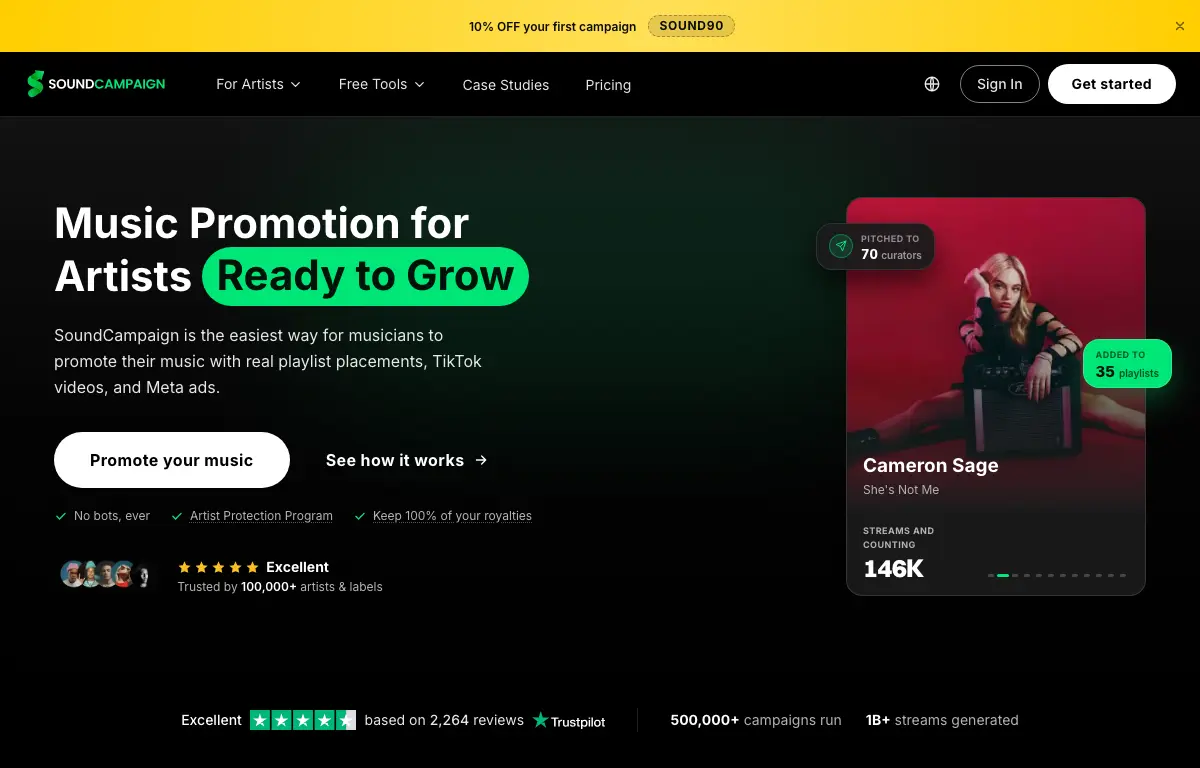
Is SoundCampaign legit?
Short answer: yes (SoundCampaign confirms it themselves, and my campaign data backs it up). The curators are real, the feedback is human-written, and the playlists they pitch you to are real playlists with real listeners. It's not flawless, but the things people usually call shady about playlist promotion (bot streams, fake curators, opaque pricing) aren't happening here.
The company has been running since 2018, according to its About page. The model is the same one Playlist Push, Groover and SubmitHub use: you pay for a curator's time to listen and respond, not for a guaranteed add. SoundCampaign's pricing FAQ says it directly: "Curators are compensated for reviews, not for placements on their playlists". That's the legitimacy test for this whole category. A service that promises placements or stream counts is either buying the slot or faking the plays.
An independent artist who tested three playlist services side by side came to the same view. Jason Little (more on his test below) said SoundCampaign "was the only one that seemed legit just based on how they operate", and that he suspected the other two of inflated numbers.
One practical note: SoundCampaign says its only official website is soundcamps.com and that it isn't affiliated with soundcampaign.com. Check the domain before you pay.
Is SoundCampaign a scam? What the Reddit, YouTube and Facebook posts say
No. But the people calling it one aren't making it up, and their complaints are worth understanding before you spend money.
Search for SoundCampaign reviews and you'll find a Reddit thread on r/fantanoforever titled "Sound Campaign is a SCAM, Musicians pay money for nothing", a YouTube Short called "BEWARE of Sound Campaign music promotion service", and a post in a Facebook group telling musicians to avoid it. Reddit and Facebook block the tools we use to check sources, so we can't quote those two. The YouTube videos we could watch in full:
- "Sound Campaign is AWFULL - My experience with them and why I think it's a scam" (D'luna, October 2023). He describes an $80 campaign for a 16-minute instrumental prog-rock track: six curators reviewed it, most praised the production, and all six declined. Earlier campaigns, he says, returned fewer reviews than the estimate and got rejected too, and the one campaign that did land two playlists stopped bringing streams when it ended. He says free submission sites placed the same track, and calls SoundCampaign close to a scam in his opinion.
- "BEWARE of Sound Campaign music promotion service" (Rock Mixer, March 2026). A curator's feedback on his instrumental album suggested the track "could benefit from a stronger vocal hook." He took that as proof the reviews are canned AI responses, and says that one review cost him $5.
Neither video alleges fake streams. The first describes the model working as designed: you pay for reviews, and a review can be a no. That's frustrating at $80, and in our view a 16-minute prog instrumental is a hard pitch for any curator network. On the shortfall in reviews, SoundCampaign's terms credit back any review that doesn't happen, though he doesn't say whether that happened. The second video alleges something worse: that the reviews themselves are canned.
The second complaint is the one to take seriously. Feedback that doesn't match the song (a vocal note on an instrumental) shows up in Trustpilot reviews too. SoundCampaign says its curators are real and manually approved, and we have no evidence otherwise, but a curator who skims your track still costs you the same as one who listens. That's a quality problem, and it came up more than any other complaint in the one-star reviews we read.
I read every SoundCampaign-tagged thread in r/musicmarketing, r/MusicPromotion, r/truespotify, and r/indiemusic going back two years. A lot of the testimonials looked seeded (low engagement, the same handful of artist accounts posting glowing reviews). I'm not including those.
What does Trustpilot say about SoundCampaign?
On Trustpilot, SoundCampaign holds a 3.8 TrustScore from 2,392 reviews: 74% five-star, 8% four-star, 2% three-star, 2% two-star and 14% one-star. Only 4% of reviews are two or three stars. People either got placements and useful notes, or they paid for declines and left angry.
A few things to know when you read them. Trustpilot shows that SoundCampaign invites its customers to review, whether positive or negative, and that it pays for a Trustpilot subscription. The verified reviews we checked came through those invitations. The company had replied to 90% of negative reviews when we checked. The badge on SoundCampaign's own homepage shows a different count (2,264 reviews) and the label "Excellent"; use the figures on Trustpilot itself.
The one-star reviews repeat the same few complaints: feedback that reads as generic or machine-written, curators outside the song's genre with no way to choose them yourself, and refund requests refused.
P
Pontus
SwedenSeptember 18, 2026
Easy to use and transparent
Easy to use and transparent, also great customer service. Would have liked a better hit rate on playlist, but thats on me I guess. The feedback from curators was quality though
S
SteveB
United KingdomOctober 22, 2026
Total Rip Off
$200 for 10 reviews saying they liked my track but it wasn't quite what they were looking for, and 2 additions to playlists. If it was not what the playlists were looking for, why was it sent there. I had no choice in the matter. The reviews (which i apparently should be grateful for) were generic and unhelpful. This is a total rip off - beware!
N
Noisetom
GermanyDecember 17, 2024
My Experience with SoundCampaign
In my case, around 15% of the curators added my track to their playlists, which I found encouraging. While this may not seem like a high percentage to some, it was a great opportunity for me to reach new audiences and build connections with playlist curators in my genre.
How does SoundCampaign work?
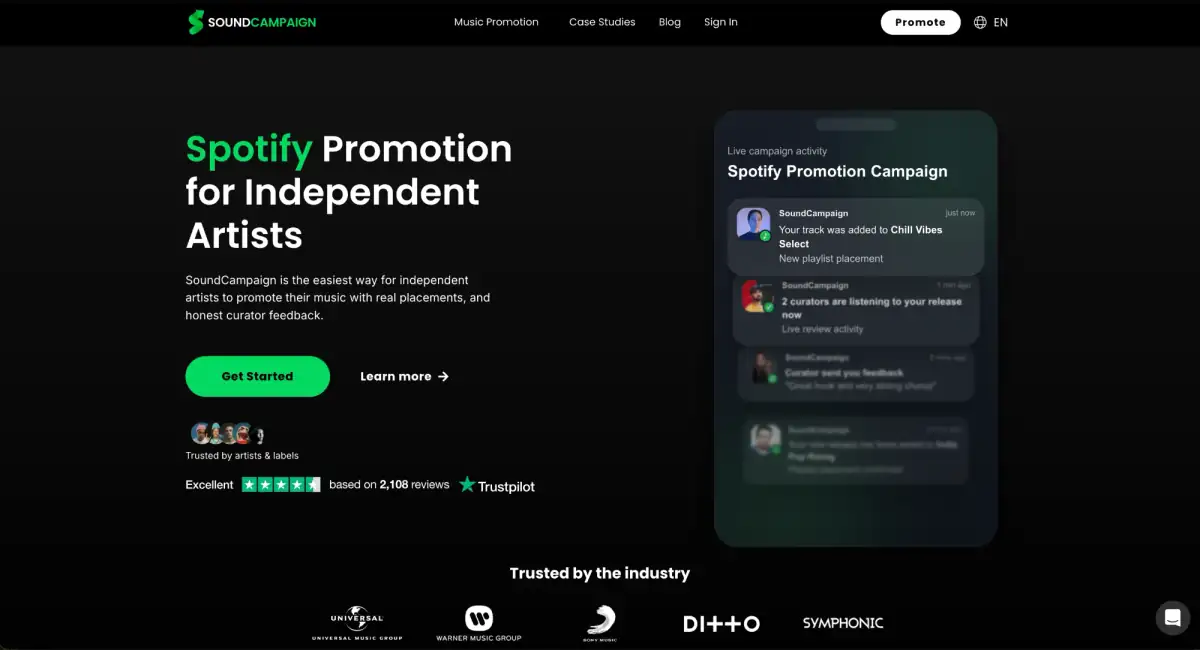
When I first stumbled upon SoundCampaign, I'll admit, I was skeptical. Another music promo service promising to connect me with curators and boost my streams? We'll see. But after exploring their sleek website, I realized they're more than just marketing fluff. They connect your music to Spotify playlist curators who might genuinely vibe with your track. Keyword: might.
The thing that really stood out to me was how transparent they are. Unlike some other services with vague promises, SoundCampaign is upfront about what you're paying for and what you can expect. Honestly, it felt refreshing in an industry where smoke and mirrors seem to be the norm.
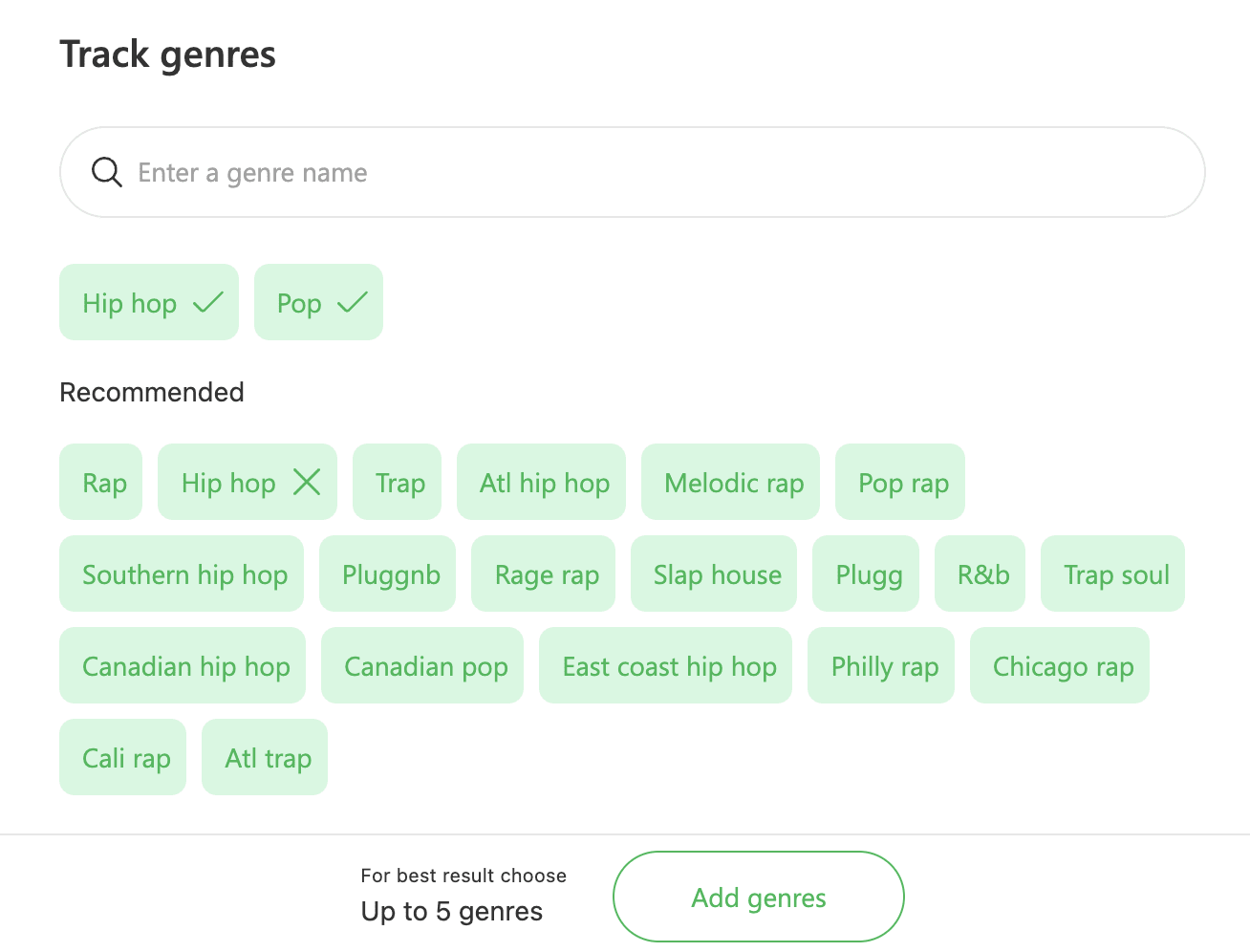
Getting started was refreshingly simple. I added my track, set a budget (we'll get into that), and chose the genres that fit my sound. It felt like speed dating for playlists. The interface walks you through everything step by step, so even if you're not tech-savvy, you're covered.
What I really appreciated here was the detailed genre selection. You're not stuck with broad genres like "pop" or "hip-hop" – you can dive into specific subgenres. It's a great way to make sure your music lands in the right ears. If your track's a soulful indie anthem, it's not ending up in a playlist full of electronic bangers.
That said, there's one catch: you need a Spotify track link to get started. If your song isn't already on Spotify, you'll need to sort that out first. For most artists, it's not a deal-breaker, but it's something to keep in mind.
That's changed since my campaign: pre-release campaigns now take the unreleased audio file instead, so you can pitch curators before release day.
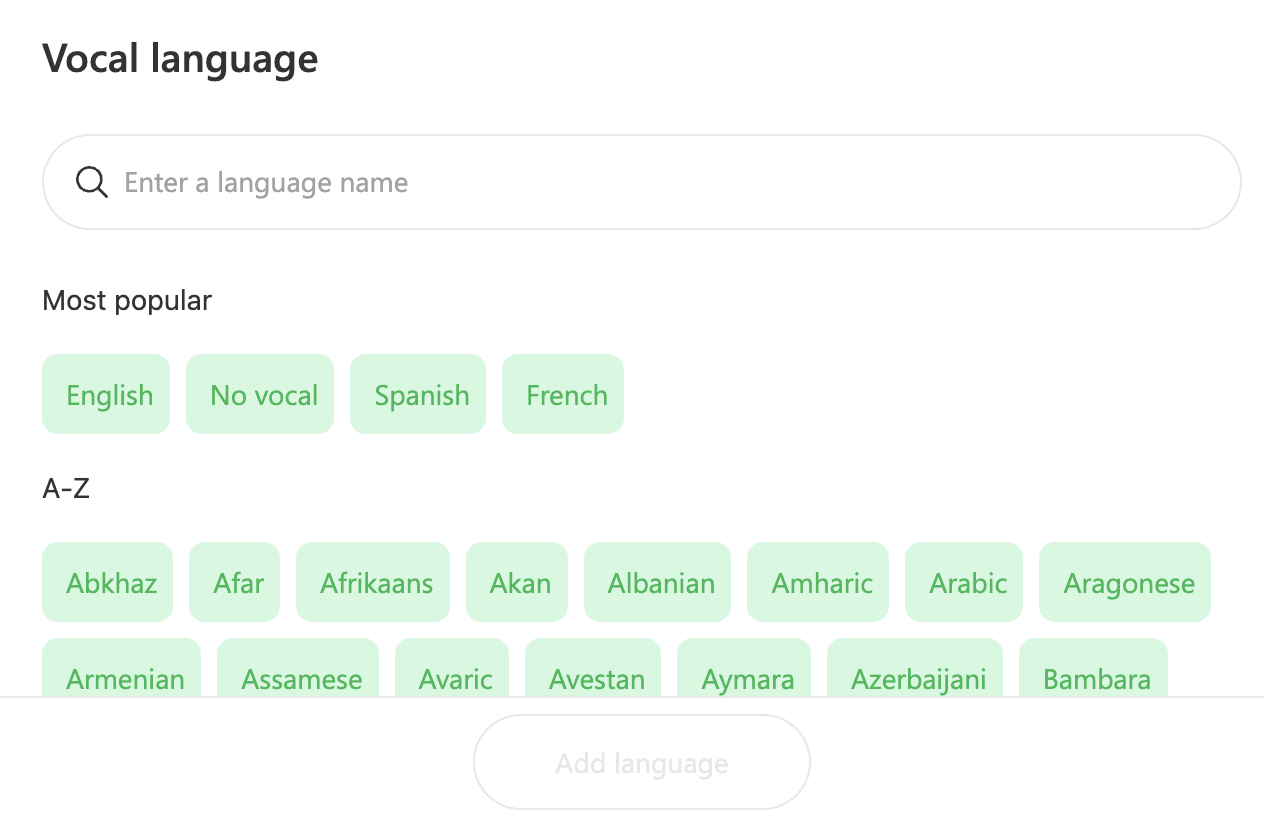
What you can't do is pick the curators. SoundCampaign matches your song to curators from the genres and language you choose. Its FAQ says there's no geographic targeting, though you can limit the campaign to instrumental playlists. Artists also can't contact curators beforehand or know who they are until a review comes in.
On network size, SoundCampaign's curator sign-up page counts 1,227+ curators. Its pricing page advertises an "extensive network (10,000+)" without saying what that figure counts.
How much does SoundCampaign cost? What each budget buys
Let's talk numbers. Campaigns start at $80, but the final cost depends on how many curators you want to reach and how broad your targeting is. For my campaign, I spent $150, which connected me to about 10-15 playlists. Is it cheap? No, but compared to some other services that charge exorbitant fees with little clarity, it's reasonable.
Here's a quick breakdown: you're essentially paying for the chance to pitch your track to curators. There's no guarantee they'll add it to their playlists, which can feel like a gamble. But when it works, it works. I averaged around $0.085 per stream, which isn't groundbreaking but felt like a solid starting point for building my audience. For context on whether that number is good or bad against the rest of the field, see our full comparison of Spotify promotion services.
There are no fixed packages. You set a budget on a slider, from $80 to $5,000+, and the pricing page estimates what it reaches:
| Spotify budget | Estimated curator submissions | Total playlist followers |
|---|---|---|
| $80 | Up to 7 | 52,166 |
| $150 | Up to 17 | 126,688 |
| $300 | Up to 37 | 275,733 |
| $500 | Up to 65 | 484,396 |
| $1,000 | Up to 135 | 1,006,054 |
Source: SoundCampaign campaign estimator, read October 28, 2026. Those are submissions, not placements. How many curators add the song depends entirely on their response.
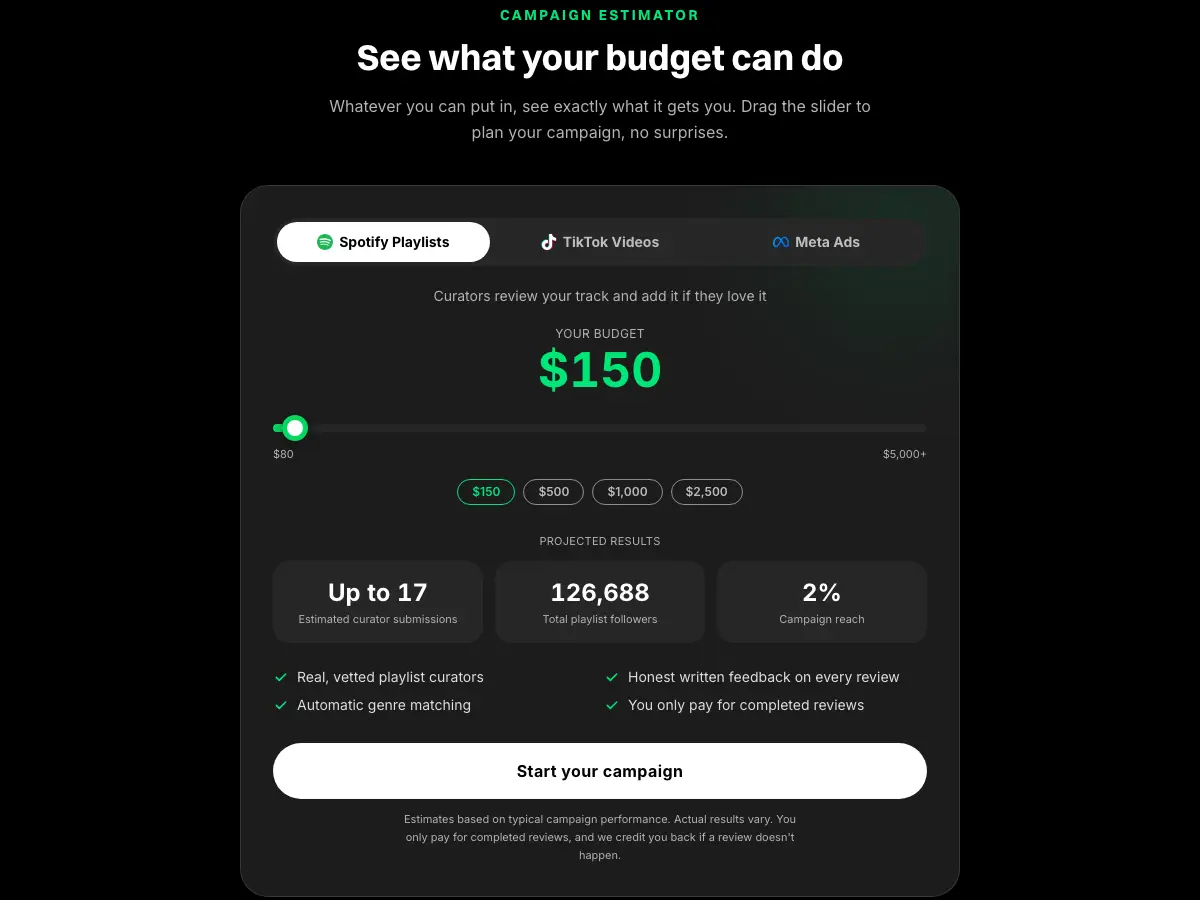
The same budget can cover TikTok and Meta ads. TikTok campaigns start at $150, which the estimator puts at 8 creator videos (25 at $500). Meta ads start at $5 a day. SoundCampaign says it never takes a cut of your streams or royalties. When we checked, the site was showing a 10% discount code, SOUND90, for a first campaign.
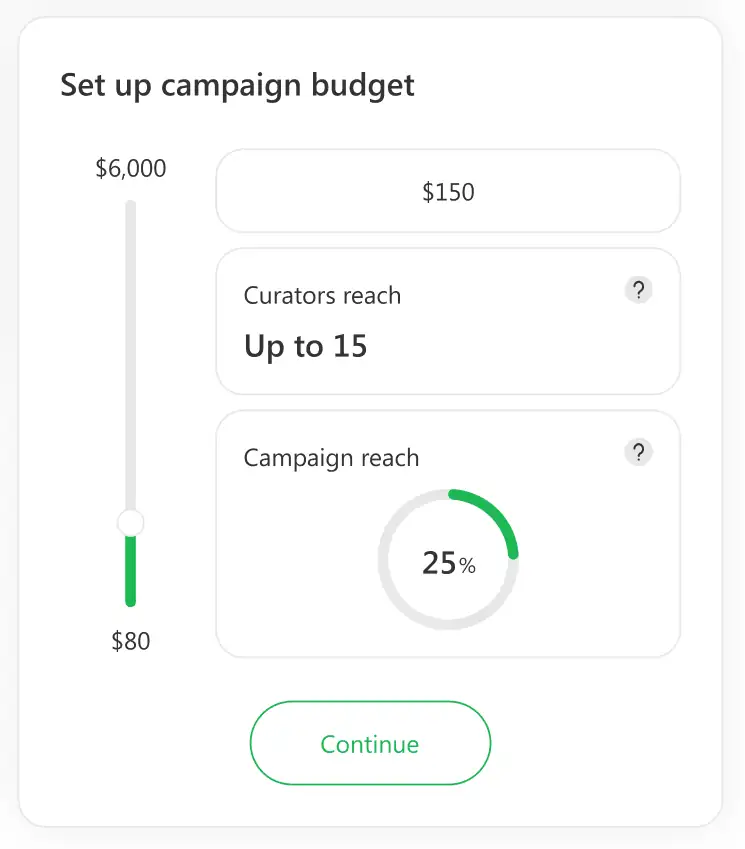
Do you get a refund if a curator doesn't review your song?
You get credit, not a refund. Under SoundCampaign's Artist Protection Program, if a curator or creator doesn't review your track, the cost of that review is credited back to your SoundCampaign balance for a future campaign. It doesn't go back to your card.
A curator who listens and declines has done the review, so you pay for it. SoundCampaign's refund policy is blunt: "our campaigns are non-refundable", including when a song isn't added to a playlist or doesn't reach a number of streams.
That's the source of many of the angry Trustpilot reviews. If you go in expecting placements, a campaign of polite declines feels like money for nothing. If you go in expecting reviews, it's what you paid for. Either way, budget only what you're fine turning into feedback.
What kind of results did the SoundCampaign campaign deliver?
Here are the actual numbers from my $150 campaign. Out of roughly 16 curators contacted, five added my song to their playlists. Over the next two weeks, I tracked 1,874 streams in Spotify for Artists. More importantly, the listeners seemed engaged. I saw a jump in saves and follower count alongside the play count, which to me signals genuine interest rather than passive background listening.
The playlists themselves were a mixed bag. Some had thousands of followers, while others were more niche. But what really stood out was the engagement. These weren't just passive streams. I noticed that listeners were actually interacting with my music, which is what you want as an artist.
Not every campaign will yield the same results, though. Some curators didn't provide feedback, which was disappointing. That's where SoundCampaign's credit policy comes in handy. If a curator doesn't provide feedback, you get credits to use for future campaigns. It's a thoughtful way to keep things fair.
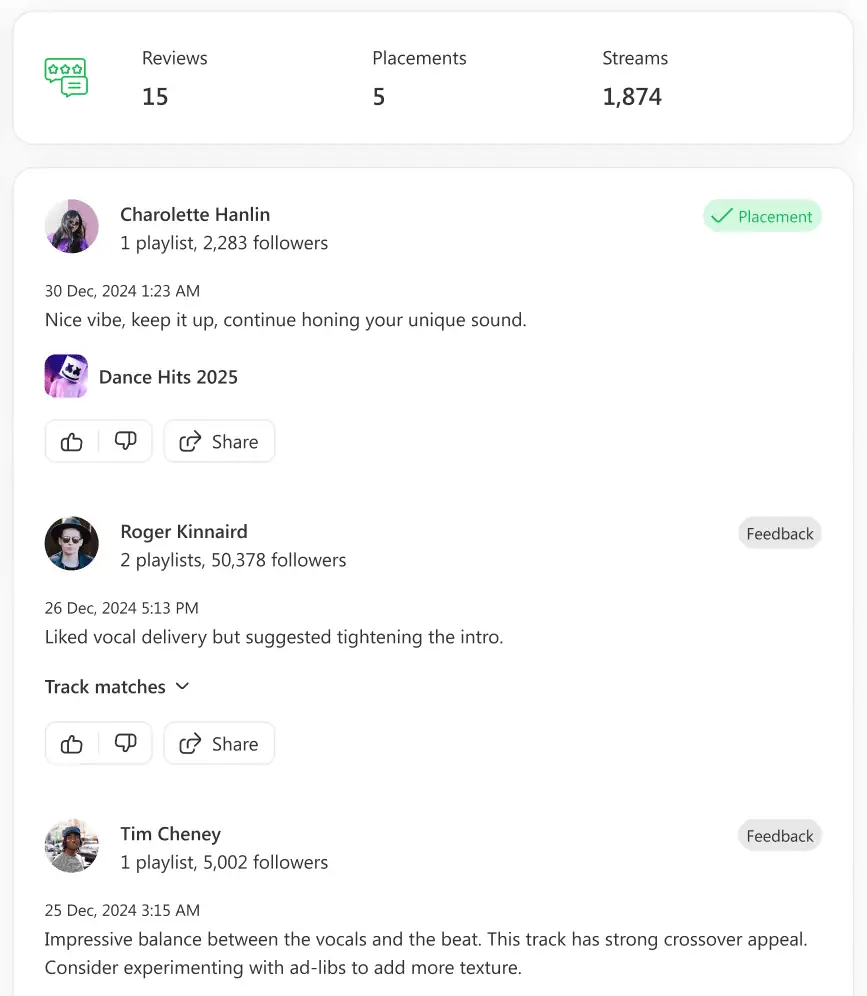
What does SoundCampaign curator feedback actually look like?
This part was gold for me. Some curators gave thoughtful feedback on my track. For instance, one mentioned how much they liked the vocal delivery but suggested tightening the intro to hook listeners faster. That's the kind of constructive critique that helps you grow as an artist.
That said, not all feedback was as detailed. A few comments felt generic, like "Nice vibe, keep it up, continue honing your unique sound." While I appreciated the encouragement, I could've done without the generic responses. But hey, you can't win them all. If you want to skip the curator middleman entirely and pitch Spotify's in-house editors yourself, our editorial playlist pitching guide walks through that flow.
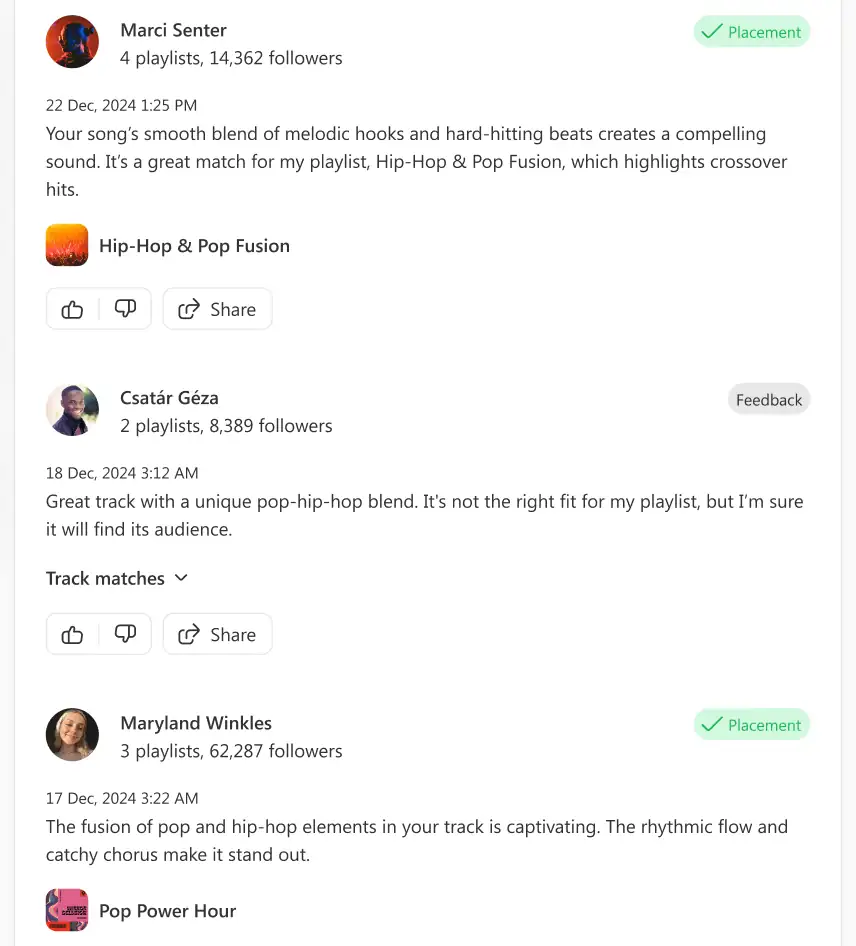
What do other artists' tests show?
Before writing this, I went and read what other reviewers have said. Not as a fact-check; more because I wanted to see if my experience was unusual or typical. The results range from very good to very bad.
From Najinsan Blog
In "I paid for Spotify playlist placements so you don’t have to" (February 2021), Najinsan submitted the same track 10 times each to SoundCampaign, Groover and SubmitHub, and wrote: "The cost per stream is my key metric and for that we observe Soundcampaign is the clear winner." Here's how the three landed:
| Platform | Playlists added (out of 10) | Total cost | Cost per successful submission | Total streams | Cost per stream |
|---|---|---|---|---|---|
| SoundCampaign | 8 | $90 | $11.25 | 1,000 | $0.09 |
| Groover | 2 | $20 | $10 | 90 | $0.22 |
| SubmitHub | 4 | $20 | $5 | 150 | $0.13 |
The pitch fee that looks cheapest isn't always the cheapest result. In his test, SubmitHub worked out to $5 per successful submission, which sounds great until you count what actually got played. SoundCampaign placed more songs and pulled in more listeners per placement, so the per-stream math ended up lower. And his $0.09 per stream is almost exactly what I saw on my own campaign: $0.085. Two different artists, two different years, basically the same number.
Read his update before you lean on that number, though. On March 14, 2021 he added a second SoundCampaign campaign for another song: $159, 290 streams, $0.55 per stream. The song was accepted onto 7 playlists and later removed from 4 of them, and his advice changed to "steer a wide berth round Soundcampaign; you just can’t trust the integrity of the playlisters." Same service, same artist, a result more than six times worse per stream. That spread is the honest answer to "does it work": it depends heavily on the song and on which curators say yes.
From Music Review World
In their SoundCampaign review, Music Review World writes: "Unlike shady services promising streams (likely from bots), SoundCampaign connects you with actual Spotify curators." It also writes: "SoundCampaign is a great option if you’re seeking real playlist placements and actionable feedback—but don’t expect miracles."
From an indie artist's YouTube test
Jason Little, an indie singer-songwriter who runs his own YouTube channel, did basically what I did but on video. He promoted his single "Whiskey Sunsets" through three paid services: SoundCampaign, Playlist Booker and Members Media. The video title says $724, which is Canadian dollars; his description puts the total at about $530 USD.
SoundCampaign was the only one of the three with a dashboard and curator responses: 10 reviews, four placements and six declines. The other two sent him an email listing the playlists. SoundCampaign also brought the fewest streams of the three. Playlist Booker was cheapest per stream at about 3 cents, a number he said he didn't trust because its listener and stream counts were almost identical.
The number worth pausing on comes at the start of the video. His 28-day total was almost 14,000 streams, but the figure he called the only one that really mattered was 135 saves: people who chose to keep the song. Saves are the number we'd watch too, because a save is a listener deciding they want to hear it again. It's also the same metric I was watching on my own track, and it lines up with what he saw.
What are SoundCampaign's pros and cons?
Pros
- Transparent process: You know exactly what you're paying for and what to expect.
- Curator network: The curators seem legitimate, genre-specific, and genuinely interested in discovering new music.
- Credit system: You get credits for curators who don't provide feedback, which feels fair.
- Responsive support: The customer service team was helpful and quick to answer my questions.
- Actionable feedback: When it's good, the feedback can really help you level up your music.
Cons
- No guarantees: You're paying for outreach, not guaranteed placements.
- Varied results: Success depends on your track, your genre, and a little bit of luck.
- Cost: It's not the cheapest option, and campaigns can add up if you're not careful.
- Feedback quality: While some feedback is excellent, others can feel rushed or generic.
- No curator picking: you choose genres and language, not playlists or countries.
- Declines are paid: credit back only covers reviews that never happen.
- No refunds: campaigns are non-refundable, and returned budget comes back as account credit.
Can you get paid on SoundCampaign?
Yes, from the other side of the platform. SoundCampaign pays two groups: playlist curators and TikTok creators.
Curators need a Spotify playlist with at least 1,000 real, organic followers, and every application is reviewed by SoundCampaign's moderators. Approved curators can earn up to $14 per song review, an amount SoundCampaign says can rise as their playlists grow. They're matched with songs in their playlists' genres, write feedback, and add only the songs they want. Details are on the curator page.
TikTok creators can earn up to $250 per approved video, depending on the views it gets, with no limit on how many videos they monetize. Creators are manually vetted too (creator page). Both groups are paid by direct deposit to a bank account.
If you're an artist who also runs playlists, you can do both, but SoundCampaign requires a separate account with a different email address for each role.
What else does SoundCampaign sell besides playlist pitching?
Playlist pitching is what this review tested, but it's now one of five products, and the pricing page says one budget covers Spotify, TikTok and Meta:
- Pre-release campaigns. Upload the unreleased audio and set a release date, even an estimated one. Curators listen before release, send feedback, and the placements they approve go live on release day. Curators agree not to share the track before then. Our pre-release marketing checklist covers the rest of the run-up.
- TikTok promotion. Vetted creators use your song in their videos. Campaigns run for up to 30 days, you approve every video, and you don't pay for one you reject. SoundCampaign guarantees a minimum number of views per campaign and credits you back if it falls short. For how TikTok fits a release, see TikTok music promotion explained.
- Instagram promotion. Creators feature your track in Reels and Stories. You approve the content before it posts and only pay for what you approve.
- Meta ads for Spotify. SoundCampaign's team makes video ads for your release and runs them on Instagram from its own ad account. Its FAQ says "You only pay your ad spend" and recommends $5 to $10 a day, roughly $150 to $300 a month, with first data within 72 hours. It came out first when we ranked it against seven other tools in best automated Meta ads platforms for musicians.
What are the best SoundCampaign alternatives?
If you want to compare before you commit, these are the closest alternatives for Spotify curator pitching, based on each company's own published terms:
| Platform | How you pay | If a curator doesn't respond | TikTok creators | Starts at | Visit Site |
|---|---|---|---|---|---|
 SoundCampaign | Only for completed reviews | Credited back to your balance | Yes, from $150 | $80 | |
 Playlist Push | Per review, from a campaign budget | Credited back after 14 days | Yes, from $350 | $280 | Visit |
 Groover | 2 Grooviz (€2) per curator or pro, more for top-tier ones | Credits back after 7 days | Social media influencers, pitched one by one | ~€2 per contact | Visit |
 SubmitHub | Credits, per submission | 72-hour response window; cancel a pending pitch for credits back | Separate influencer submissions | Per submission | Visit |
SoundCampaign$80starts at
- How you pay
- Only for completed reviews
- If a curator doesn't respond
- Credited back to your balance
- TikTok creators
- Yes, from $150
$280starts at
- How you pay
- Per review, from a campaign budget
- If a curator doesn't respond
- Credited back after 14 days
- TikTok creators
- Yes, from $350
~€2 per contactstarts at
- How you pay
- 2 Grooviz (€2) per curator or pro, more for top-tier ones
- If a curator doesn't respond
- Credits back after 7 days
- TikTok creators
- Social media influencers, pitched one by one
Per submissionstarts at
- How you pay
- Credits, per submission
- If a curator doesn't respond
- 72-hour response window; cancel a pending pitch for credits back
- TikTok creators
- Separate influencer submissions
- Playlist Push works the same way at a higher entry point: campaigns start at $280, and it lists 4,000+ verified playlists and 3,300+ TikTok creators. See our Playlist Push review.
- Groover prices every contact individually, reaches blogs, radios and labels as well as playlists, and returns your credits if nobody replies within 7 days.
- SubmitHub lets you choose every curator yourself. If genre mismatches are what put you off SoundCampaign, that's the direct fix. See our SubmitHub review.
For the full ranking, see best Spotify promotion services.
Is SoundCampaign worth it?
For me, yes, with a caveat. If you're early in your career, your mix is tight, and you have $150–$300 you're willing to spend on actual outreach (not "guaranteed streams" packages), this is one of the better places to put it. The curator network is the real thing. The feedback is the real thing. The reporting is the real thing. If you want to see exactly how SoundCampaign stacks against Playlist Push and the other big names side-by-side, the best Spotify promotion services breakdown does that math.
Where it falls down is when artists expect one campaign to change their career. A $150 campaign buys you data and a handful of placements, not a record deal. Go in expecting learning + a modest streams boost and you'll get your money's worth. Go in expecting to wake up famous and you'll be furious that you didn't.
It's a weaker fit if you make a niche genre, such as long instrumental prog, where the curator pool is thin. It's also a weaker fit if you want to hand-pick every playlist. SubmitHub suits that better.
If you do go ahead, here's how to make the most of it:
- Invest in quality: Make sure your track is polished and professionally mixed. Curators are more likely to take notice.
- Choose the right genres: Be honest about where your music fits. Mislabeling your track will hurt your chances.
- Take feedback seriously: Use curator insights to refine your sound and strategy.
- Set realistic goals: SoundCampaign is one piece of the puzzle, not the whole picture.
For where a campaign like this fits in a broader release plan, our indie music marketing budget guide lays it out.
Final thoughts
I'd use SoundCampaign again. I have, actually. Twice since the campaign in this review.
You're not paying for streams, you're paying for access. To real curators, to written feedback, to data you can actually read after the campaign ends. If the song is ready, that mix of things builds on itself. If it isn't ready, no curator network is going to fix it, and honestly SoundCampaign might be the cheapest place to find that out, because even the rejection notes tend to tell you something useful.
The artists who do best with it are the ones who treat the first campaign as research and the second one as the real release push. The ones who get burned are the ones who expect a $150 campaign to do the work of a label.
If you want to try it yourself, SoundCampaign is here.
Related reading
FAQ
Is SoundCampaign legit?
Yes. SoundCampaign has been running since 2018 and pays real Spotify playlist curators to review your song, not to add it, so it doesn't guarantee placements. It holds a 3.8 TrustScore from 2,392 Trustpilot reviews. The complaints we read are mostly about declined pitches and generic feedback, not about fake streams.
Is SoundCampaign a scam?
No. The scam videos about it describe paying for curator reviews that ended in declines, or feedback that felt canned. That's a real risk of the model, but it's what SoundCampaign sells: curator reviews, not placements. Reviews that never happen are credited back to your account balance. Campaigns themselves are non-refundable.
How much does SoundCampaign cost?
Spotify campaigns start at $80. SoundCampaign's own estimator puts $80 at up to 7 curator submissions, $150 at up to 17 and $500 at up to 65. TikTok campaigns start at $150, and Meta ads from $5 a day. You only pay for completed reviews, and it takes no cut of your royalties.
Is SoundCampaign worth it?
It can be, if your mix is finished, your genre tags are accurate and you treat the first campaign as a test. In our test, $150 got the track onto 10–15 playlists and 1,874 streams over two weeks. Other artists have done much worse: one blogger's second campaign worked out to $0.55 per stream. Don't spend money you need on one campaign.
Can you make money on SoundCampaign?
Yes, as a playlist curator or a TikTok creator. Curators need a Spotify playlist with at least 1,000 real, organic followers and can earn up to $14 per song review. TikTok creators can earn up to $250 per approved video, based on the views it gets. Both are manually approved before they can earn.
Newsletter
The MelodicMind brief
One short email a week. New reviews, music-industry news, and what we're working on. Free, unsubscribe in one click.